Borehole Drilling Cost in Kenya 2026
A responsible borehole company cannot give an accurate price from a phone call alone. Two properties in the same town can have very different drilling costs, because the ground beneath them is not the same.
- Cost drivers explained stage by stage
- Indicative market figures, clearly labelled
- How to compare quotations fairly
Borehole drilling cost in Kenya: the honest answer
If you are searching for the cost of drilling a borehole in Kenya, you probably want one simple figure. The truth is that the final cost depends on the depth required, the geological formation, the drilling method, the type and length of casing, the expected water demand, site access, the distance from the drilling base, the pump system and whether you want electrical or solar-powered equipment.
A home may need a smaller system than a school, a farm or a large institution, while a commercial project may require higher yield, more storage and more careful power planning.
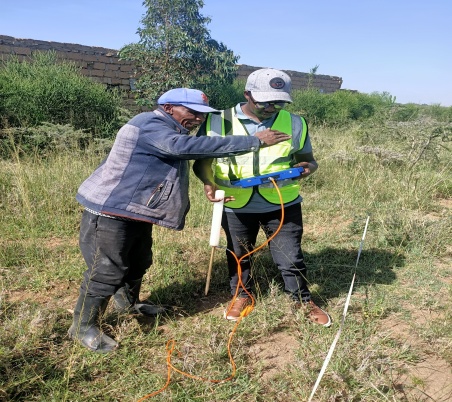
Kehill Geoengineering Limited approaches the project from the ground up. The service begins with hydrogeological and geophysical assessment, followed by regulatory support, drilling, test pumping and equipping. The company also provides pump installation, solarisation, solar backup systems and steel or concrete water towers, allowing you to plan one complete water system instead of coordinating several unrelated contractors.
Indicative 2026 planning figures
Publicly available Kenyan industry guidance published in 2026 gives indicative drilling rates that vary significantly by method and ground conditions. One published guide lists approximate air-drilling rates around KES 6,500 per metre and mud-drilling rates around KES 14,050 per metre, while its broader process estimate reaches approximately KES 6,700 per metre for air drilling and KES 15,050 per metre for mud drilling when casing, graveling, development, test pumping and laboratory analysis are included.
These figures are indicative market guidance published by another provider. They are not Kehill Geoengineering's prices and should not be treated as a quotation. Kehill prepares a site-specific quotation after assessing your property.
What the quotation should cover
| Cost area | Why it matters | What the final quotation should clarify |
|---|---|---|
| Hydrogeological survey | Helps identify promising groundwater zones and estimate likely depth and yield before drilling | Survey scope, report, mapping and recommended drilling point |
| Permits and approvals | Groundwater abstraction and construction works are regulated in Kenya | Which applications are included and which statutory fees are separate |
| Mobilisation | A drilling rig, crew, compressor and support equipment must reach the site | Distance, road access, site preparation and any special transport needs |
| Drilling | The method and depth are shaped by geology | Whether the rate is per metre and whether it changes by formation |
| Casing and gravel pack | Supports the borehole wall and helps protect the water entry zone | Casing material, diameter, thickness, slots and quantities |
| Flushing and development | Cleans drilling debris and prepares the borehole for testing | Whether development and cleaning are included |
| Test pumping | Shows sustainable yield, water level and recharge behaviour | Test duration, equipment, report and interpretation |
| Water-quality testing | Water may contain minerals or contaminants that are not visible | Laboratory tests recommended for the intended use |
| Pump and controls | The pump must match depth, yield, storage and demand | Pump type, power rating, cables, controls and installation |
| Solarisation and storage | Solar can reduce dependence on grid power; tanks help maintain supply | Panels, structure, batteries if applicable, tank and tower scope |
What can a complete project cost?
A useful budget should be built in stages rather than reduced to a single attractive number. Public market guidance places a complete borehole project in a broad range that may run from several hundred thousand shillings to well over one million shillings once drilling, casing, the pump, power, storage, approvals and site conditions are considered. A smaller domestic project and a high-demand institutional or irrigation project should not be expected to cost the same.
For planning purposes, ask for a quotation that separates the survey and approvals, drilling and construction, and equipping and power stages. That structure makes it easier to compare quotations fairly and helps you see whether a low price excludes items you will later have to pay for.
Main factors that increase or reduce the cost
1. The geology beneath the property
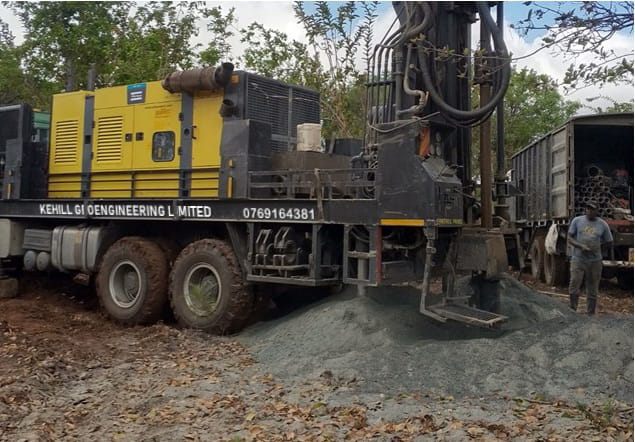
Some sites are dominated by loose soils, clay or alluvial deposits. Others require drilling through hard rock. Kehill describes mud rotary drilling as suitable for soft to medium and unstable formations, while air or Down-The-Hole hammer drilling is suited to harder rock and fractured-rock aquifers. The survey helps the drilling team choose a method that is safer and more efficient for the site.
2. The required depth and yield
A household using water for bathing, cooking and cleaning has a different demand from a flower farm, a school with hundreds of learners, a hospital, a church or a housing development. The question is not only “How deep is the water?” but also “How much water must the system deliver, and at what times of day?”
3. The construction materials
Casing, screens, gravel pack, seals and protective works are not decorative extras. They help keep the borehole stable and protect the water source. A quotation should state the proposed materials and quantities clearly instead of presenting one unexplained lump sum.
4. Access to the site
A large drilling rig needs a safe route, enough working space and a suitable drilling position. Narrow estate roads, steep land, overhead lines, soft ground or long-distance mobilisation can change the cost and schedule. Sharing photographs, a location pin and access details early helps us prepare a more accurate quotation.
5. The pump, electricity and solar option
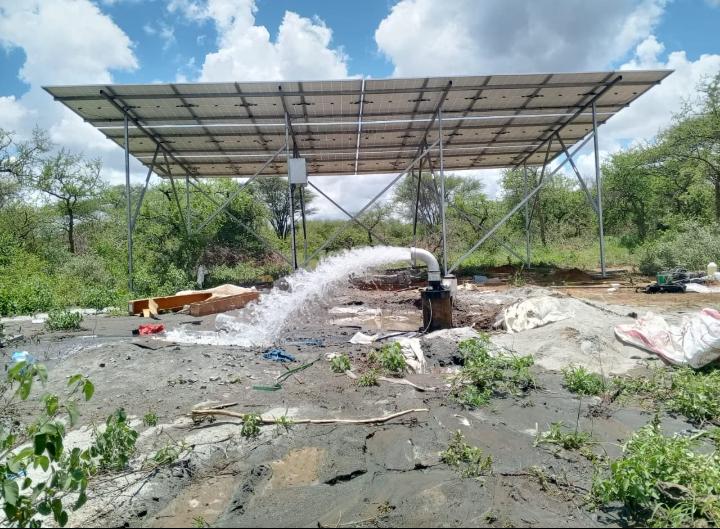
A borehole is only useful when water can be brought to the surface and delivered where people need it. The pump must be selected after the borehole is tested. Depending on the site, the system may use grid power, a generator backup or solar power.
What permits are involved?
The Water Resources Authority explains that water abstraction works in Kenya are regulated through a permitting process. The process can involve an application, technical assessment, authorisation to construct works, construction, submission of completion and water-quality documents, inspection and eventual issuance of a water-use permit. The Authority also identifies illegal drilling without authorisation, and abstraction beyond permitted thresholds, as offences.
For a client, this means permitting should be part of the conversation from the beginning. Do not assume that drilling first and sorting out paperwork later is the safest or cheapest route. Kehill assists with WRA, WARMA and EIA-related approvals as part of its end-to-end service.
How to compare borehole quotations
When comparing quotations, look beyond the headline total. Ask whether the quote includes the survey, mobilisation, drilling, casing, gravel pack, development, test pumping, water analysis, permits, pump installation, electrical works, solar equipment, storage and taxes. Also ask what happens if the actual geology differs from the initial estimate.
A professional quotation should explain assumptions in plain language. The cheapest quotation is not always the lowest-cost project if it leaves out testing, suitable casing or the power system you actually need.
Is a borehole worth it?
For a homeowner, a borehole can reduce dependence on an unreliable supply and support household use, gardening or rental units. For a farm, it can give the owner more control over irrigation and livestock water, provided abstraction is sustainable and the pump is correctly sized. For a school or institution, it can improve sanitation, kitchen operations, landscaping and daily continuity.
A borehole is an investment in infrastructure, not a shortcut to unlimited water. Test pumping, a correctly sized pump, storage and regular maintenance help protect both the system and the aquifer.
Frequently asked questions
How much does it cost to drill a borehole in Kenya in 2026?
There is no single national price. Public 2026 market guidance gives drilling-related rates that vary broadly by method and formation, with indicative figures ranging from roughly KES 6,500 per metre for air drilling to about KES 14,050 per metre for mud drilling before all project-specific additions are considered. A complete project may cost substantially more once survey, permits, casing, testing, pump, power and storage are included. These are indicative market figures from public sources, not Kehill's quotation — Kehill should confirm the current site-specific quotation.
Does Kehill Geoengineering publish a fixed price list?
No. Kehill does not publish a fixed price list. Clients are invited to request a free, no-obligation quote after sharing their location and project requirements.
Is the hydrogeological survey necessary?
It is an important planning step because it helps locate a promising drilling point and informs the expected depth, geology and drilling method. It cannot guarantee a particular yield, but skipping professional assessment can increase uncertainty and risk.
Can solar power be used for a borehole?
Yes. Kehill lists borehole installation and solarisation, solar backup systems and water towers among its services. The final solar design should be based on the pump size, daily demand, storage and available sunlight.
Ready to plan your borehole?
Tell us where the property is located, who will use the water, whether the project is domestic, agricultural or institutional, and whether you are considering solar power. We can then advise on the next step and prepare a site-specific quotation.
- 0769 164 381
- 0790 589 500
- 0724 774 227
- kehillgeoengineeringltd@gmail.com
- Grey Park Annex Building, Eastern Bypass, Utawala, Nairobi, opposite Grace Memorial Hospital