How Borehole Drilling Works in Kenya
Borehole drilling is not simply a matter of bringing a rig to a property and drilling until water appears. A successful project combines hydrogeology, regulation, drilling, construction, testing and equipment.
- All twelve practical stages explained
- Survey, permits, drilling, testing and equipping
- What to prepare before requesting a quote
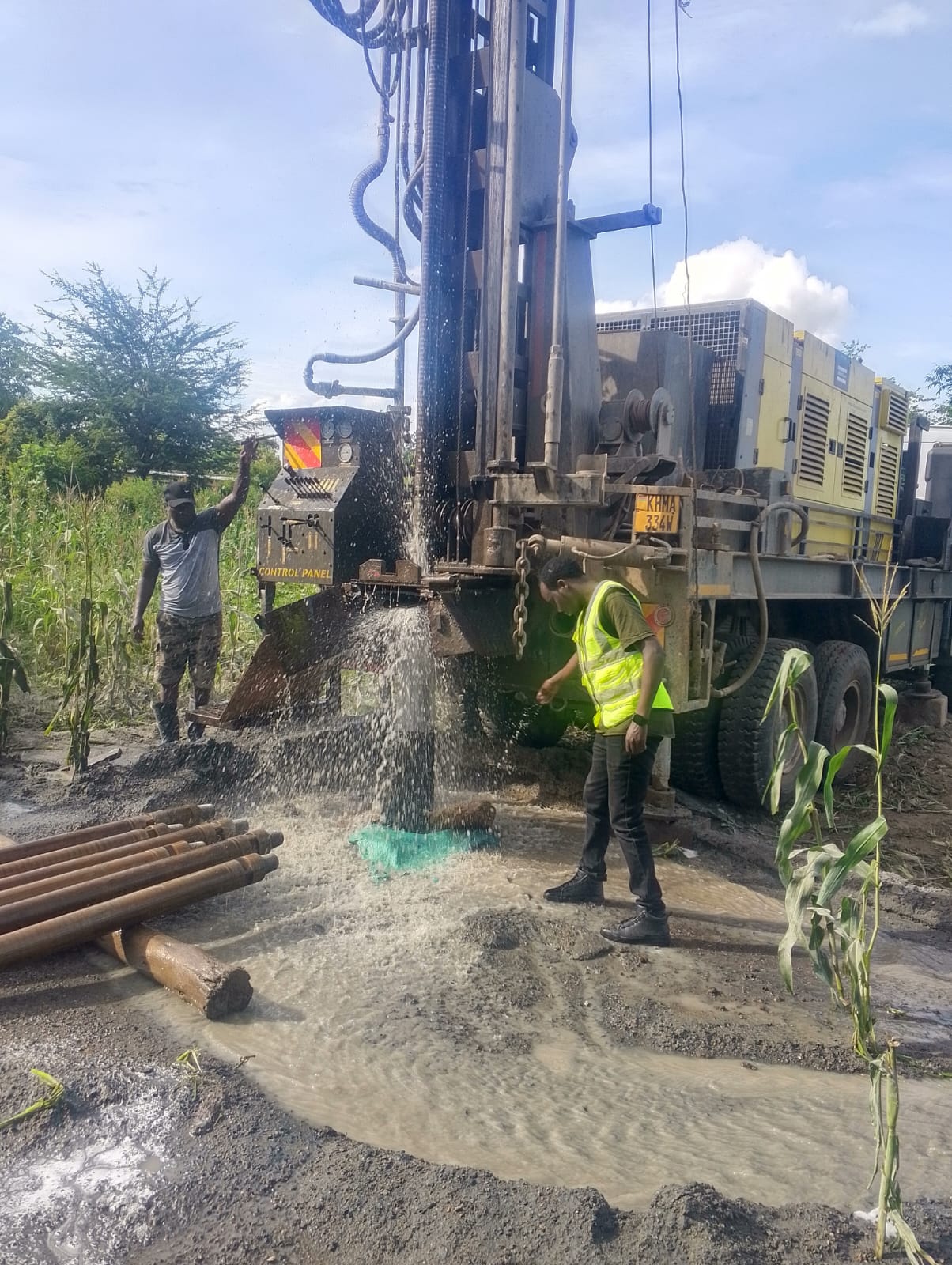
From a dry plot to a working water system
Kehill Geoengineering describes its process in four broad steps: site survey, permits, drilling and equipping. Behind those four steps are several practical activities that homeowners, farms, schools and institutions should understand before work begins.
Step 1: Discuss the water need
The first conversation should be about use. Is the water for a family home, rental units, irrigation, livestock, a school, a church, a hospital, a university, a factory or a mixed-use development? How many people will depend on it? Will demand grow? Will water be needed every day or mainly during certain seasons?
These details influence the survey, the required yield, tank size, pump selection, power system and budget. A contractor who asks about demand before discussing equipment is more likely to design a useful system than simply drill a hole.
Step 2: Carry out a hydrogeological survey
A hydrogeological survey studies the site and the surrounding geology to identify promising groundwater zones. Geophysical methods and subsurface imaging can help locate a recommended drilling point and estimate the likely geological sequence, depth and water-bearing formations.
A survey is not a magic guarantee of water. However, it gives the project a scientific basis and can reduce the risk of placing the rig in a poor location. Kehill lists hydrogeological surveys, GIS and remote sensing among its services, and uses subsurface imaging and geophysical survey to locate the best aquifer.
Step 3: Secure the necessary approvals
Groundwater abstraction works are regulated in Kenya. The Water Resources Authority states that permitting involves an application, technical evaluation, authorisation to construct works, construction, submission of completion and water-quality documents, inspection and issuance of a water-use permit. It also identifies illegal drilling without authorisation as an offence.
The exact approvals depend on the project and location. Kehill helps clients with WRA, WARMA and EIA approvals. A good contractor should explain which documents are required, who submits them, what fees apply and how the approval process affects the programme.
Step 4: Prepare the drilling site
The rig needs a stable, accessible working area. The team may need to plan vehicle access, clear vegetation, protect buildings and services, manage water and cuttings, and agree how the site will be left after drilling. On a small urban plot, preparation can be as important as the drilling itself.
Before mobilisation, the client should disclose underground cables, pipes, septic systems, property boundaries, restricted areas and any access limitations. Good preparation reduces delays and helps keep people and property safe.
Step 5: Choose the drilling method for the ground
Mud rotary drilling uses circulating drilling fluid to support the borehole and carry cuttings to the surface. It is commonly suited to soft or unstable formations such as clay, sand and loose alluvial soils.
Air or Down-The-Hole (DTH) hammer drilling uses compressed air to power a hammer at the bottom of the drill string. It is suited to harder formations such as granite, basalt and gneiss and can work effectively in fractured-rock aquifers.
Neither method is automatically “better” everywhere. The survey and the formation guide the choice.
Step 6: Drill and record the formation
As drilling progresses, the crew observes the cuttings, changes in the formation, water strikes and drilling behaviour. This information helps refine the construction design. The final depth is influenced by the survey interpretation and what is encountered underground.
Kehill's Max Drill rig is equipped with a 330 psi compressor and can drill down to 500 metres. That is an equipment capability, not a promise that every client needs or will receive a 500-metre borehole. Projects should be designed around the local geology and actual water demand.
Step 7: Install casing and complete the borehole
Casing supports the borehole wall and helps prevent collapse. Screened or slotted sections are positioned where water can enter, while solid casing is used where the formation needs support or isolation. Gravel pack, seals and a sanitary surface completion may also be part of the construction specification.
The precise materials and dimensions should appear in the quotation and completion record. Ask what casing is proposed, how much will be installed, how water-bearing zones will be protected and how the top of the borehole will be sealed against contamination.
Step 8: Flush and develop the borehole
Drilling leaves fine material and cuttings in the borehole. Flushing and development remove debris and help the formation around the screen produce water more effectively. This stage should be completed before relying on the borehole for normal use.
A borehole that produces water immediately is not necessarily ready for a pump or for drinking. It still needs proper development, testing and water-quality assessment.
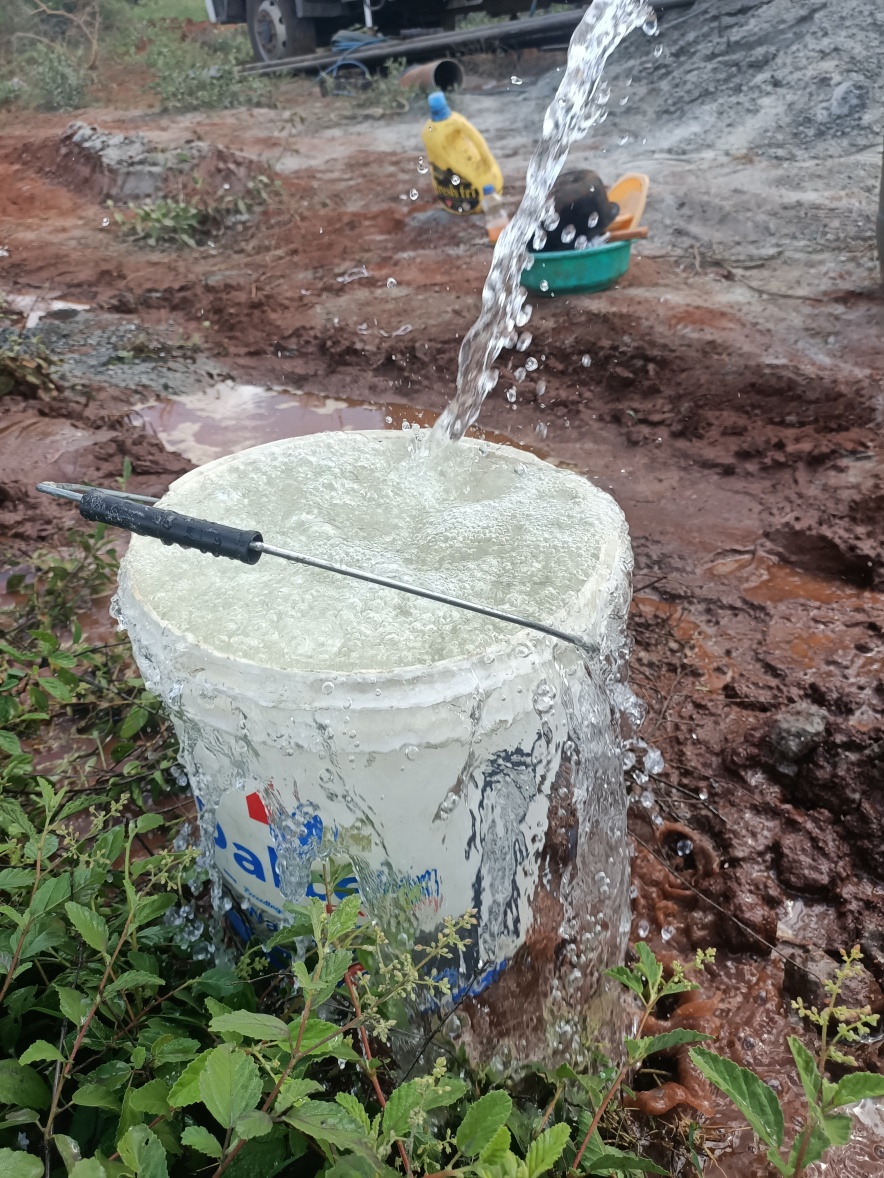
Step 9: Carry out test pumping
Test pumping measures how the borehole performs when water is withdrawn over time. It helps establish the pumping rate, drawdown, recovery and sustainable yield, and it informs the selection of the permanent pump and the size of storage required.
This is particularly important for farms, schools and institutions. A pump that is too large can over-pump the borehole, while a pump that is too small may not meet demand. Kehill operates a dedicated test-pumping unit and lists test pumping, flushing and pump installation among its services.
Step 10: Test the water quality
Water quality is a separate question from water quantity. A borehole may produce a strong flow but still require treatment for drinking or specialised use. Laboratory analysis can identify chemical and biological characteristics and help determine whether filtration, disinfection, reverse osmosis, aeration or another treatment approach is appropriate.
Do not assume that clear water is automatically potable. Test before drinking, food preparation or supplying a school, health facility or institution.
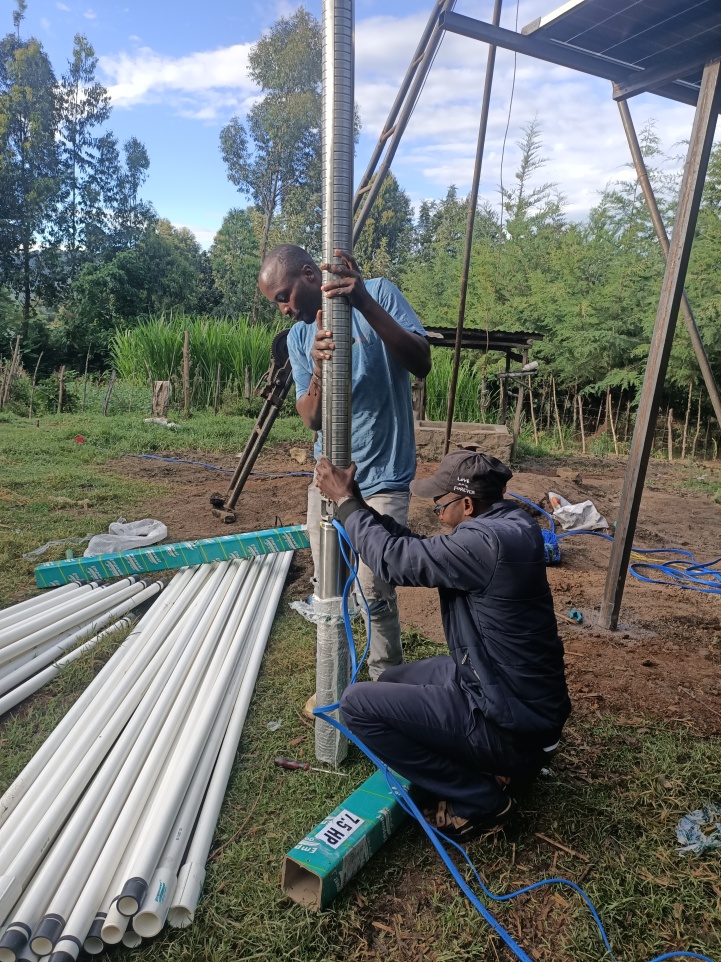
Step 11: Install the pump, power and storage
Once test results are available, the permanent pump can be selected. The system may include a submersible pump, rising main, cables, control panel, protection, tank, tower and distribution pipework. Solarisation may be suitable where grid power is unavailable, expensive or unreliable.
Kehill provides borehole installation and solarisation, solar backup systems, and steel and concrete water towers, so the project can be designed as a complete water solution rather than as drilling alone.
Step 12: Commission, document and maintain the system
At handover, the client should receive the relevant completion documents, test-pumping information, water-quality results, equipment details and maintenance recommendations. The borehole should be protected from contamination, the pump should be serviced, water levels should be monitored where appropriate and water quality should be retested when conditions or use change.
A well-designed borehole can serve a property for many years, but it is not maintenance-free. Good operation protects the pump, the budget and the aquifer.
How long does the process take?
The schedule depends on approvals, access, depth, geology, weather, equipment availability and the scope of equipping. A straightforward drilling job may move faster than a large institutional project requiring extensive approvals, high-capacity pumping, solar power and storage.
We do not promise water, a specific yield, a specific drilling depth or a fixed completion time. A realistic programme is provided after the site has been assessed.
What should you prepare before requesting a quote?
Have the property location or pin, approximate plot size, access photographs, current water source, intended use, estimated users, irrigation or livestock details, power availability and any future expansion plans ready. If you are a school or institution, explain peak demand and existing tanks. If you are a farmer, provide the planned crop or livestock water requirement.
The more clearly the need is described, the more useful the first technical conversation will be.
Frequently asked questions
Does a survey guarantee water?
No. A survey improves the basis for choosing a drilling point and anticipating conditions, but groundwater is a natural resource and no responsible contractor should promise a guaranteed yield without qualification.
Is drilling allowed without permits?
The Water Resources Authority states that illegal drilling without authorisation is an offence and that a water-use permit is required for lawful abstraction. Confirm the applicable requirements before work starts.
Is borehole water automatically safe to drink?
No. Water should be tested in a laboratory before drinking or food preparation. Treatment may be needed depending on the results.
Can a borehole run on solar power?
Yes. Solar pumping is a common design option where it suits the pump, daily demand, storage and site conditions. Kehill lists solarisation and solar backup systems among its services.
Does Kehill handle the full process?
Kehill describes an end-to-end service covering survey, permits, drilling, test pumping, pump installation, solar power and water storage, subject to the project scope and quotation.
How long does the process take?
The schedule depends on approvals, access, depth, geology, weather, equipment availability and the scope of equipping. A straightforward drilling job may move faster than a large institutional project. The contractor should provide a realistic programme after assessing the site.
Start with a proper site conversation
If you are considering a borehole for your home, farm, school or institution, share the location and intended use and we will help you move from uncertainty to a clear plan.
- 0769 164 381
- 0790 589 500
- 0724 774 227
- kehillgeoengineeringltd@gmail.com
- Grey Park Annex Building, Eastern Bypass, Utawala, Nairobi, opposite Grace Memorial Hospital